

Over 30 years of anarchist writing from Ireland listed under hundreds of topics
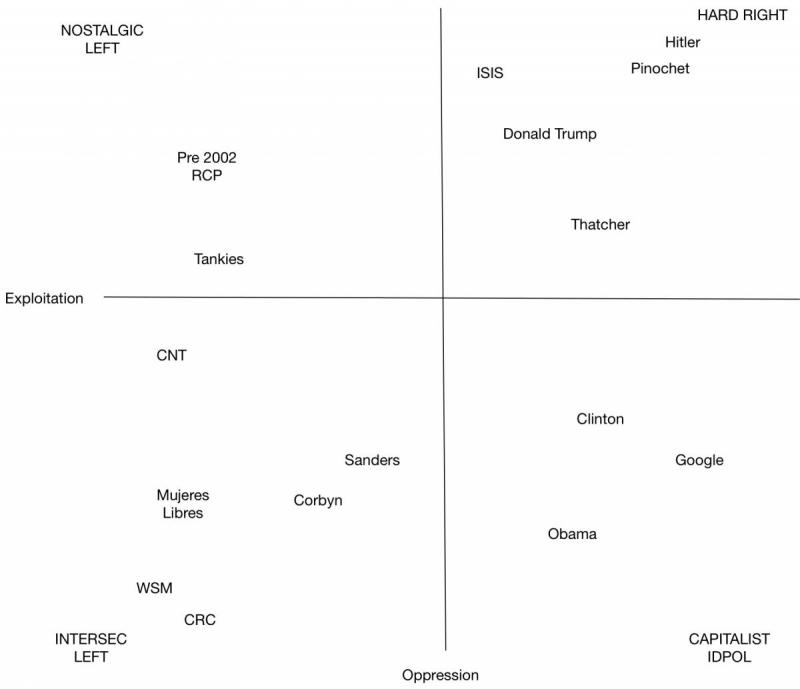 Discussions about Identity Politics (IdPol) absorbs a huge amount of energy across the political spectrum. Discussion on the left however is often complicated and made overly hostile because they take place along the single axis of oppression which means proponents of IdPol get lumped in with Hilary Clinton while opponents get lumped in with Donald Trump. This understandably encourages bad faith discussions that throw a lot of heat and very little light. Here we are going to argue that a much more useful exchange can happen when we instead create a plot where one axis is oppression and the second is exploitation as that puts both Trump & Clinton a good distance away from socialists. [Audio of this article]
The 12th Dublin anarchist bookfair heard this account from Wendy, a Human Rights & immigration lawyer who visited Rojava in May 2018 as part of a fact finding delegation. [audio]
An in-depth interview with Mark Bray, author of ‘Translating Anarchy’, a book which tells the story of the anti-capitalist anti-authoritarians of Occupy Wall Street who strategically communicated their revolutionary politics to the public in a way that was both accessible and revolutionary. [Audio]
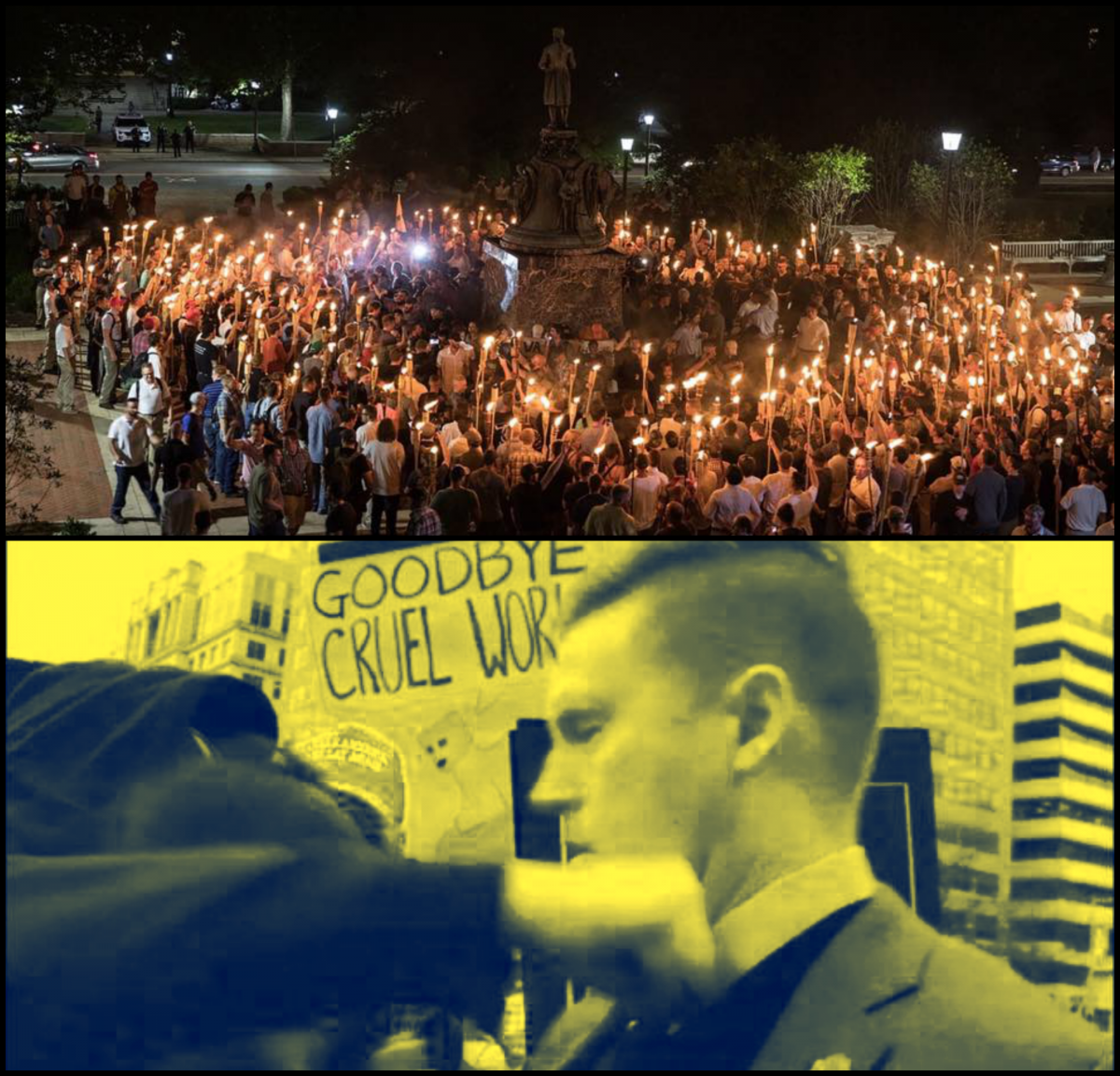 Whenever the topic of fascism arises, whether it's a fascist group being prevented from meeting, or a gang of far-right thugs attacking someone, often someone will demur in the following way:
'You like to use the word fascism, what is fascism in your mind? That word is used to scaremonger.'
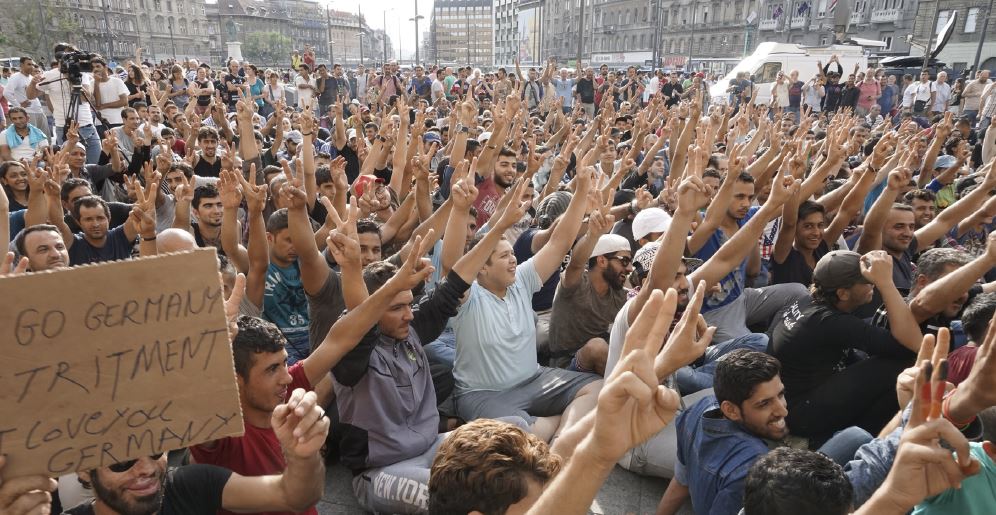 For over a year, the European Union (one of the most prosperous areas on the planet), has been embroiled in a ‘crisis of immigration’ - the result of failed government responses to increased population inflows coming from the Middle East and Africa. The hundreds of thousands of migrants attempting to travel to Europe are refused conventional safe entry and are forced to rely on criminal smugglers and dangerous land and sea routes. The predictable result has been a massive humanitarian crisis, concentrated at bottleneck transit points such as the Greek islands, and in sprawling migrant camps within and outside Europe.
 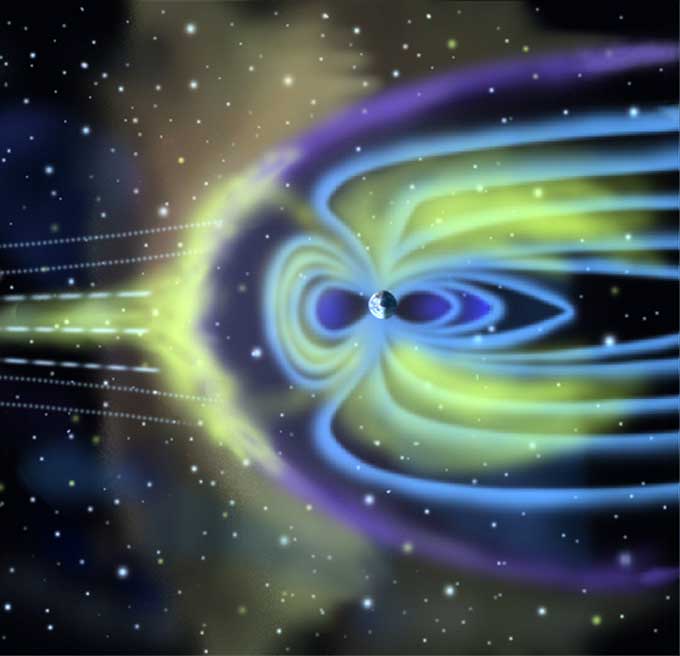 Our global society is broken. Donald Trump & Brexit are symptoms along with the rise of the far right elsewhere in Europe. In an old pattern, fundamental economic crisis often results in society becoming very much more brutal for most people. In the age of nuclear weapons this current crisis could be our last. And with a somewhat longer countdown to disaster we are also facing climate catastrophe.
The crisis is fundamental rather than temporary because there are two underlying factors that are irreversible. The first is the end of the era where the environmental costs of growth could be mostly discounted in the belief that dilution would neutralise pollution. For much of the industrial revolution the poisonous effluent dumped into the ecosystem had only local severe effects with the vast oceans and atmosphere diluting the pollutants enough that global effects were minor. This is no longer the case with climate change being the most talked about of several examples where the pollution generated by growth can no longer be absorbed without serious global consequences.
[As this is a long read we have also made
the entire piece available on audio,
listen as you are doing the dishes
or you can download a PDF version]
Collectively agreed by WSM National Conference, Oct 2016.
What this paper does
The left talks about class in ways that are often contradictory and confusing. This paper represented our collective use of class and how we understand exploitation. The scope of what we cover means that it necessarily makes sweeping generalisations but the goal is to sketch what our collective perspective is around these, not to be an educational resource in itself.
What this Paper is
What we summarise below is what the WSM has collectively agreed are the prospects for struggle in the short and medium term both in terms of global and local capitalism but more importantly of the existing movements and struggles and those we think are coming into existence. It should be read in conjunction with ‘The Role of the Anarchist Organisation’ which is the long term strategic view within which these short and medium terms considerations are shaped. Fundamentally we think ‘kick it till it breaks’ leads to burnout and inactivity. Sustained organising over decades requires a collective understanding and identification of the moments of opportunity scattered through the periods of preparation and experimentation.
What is this?
This paper outlines how we the intersections of exploitation and oppressions and what approach the WSM takes in relation to this. Our collective theoretical understanding is framed in the WSM Constitution’s core point of unity number 7: “We actively oppose all manifestations of prejudice within the workers' movement and society in general and we work alongside those struggling against racism, sexism, [religious] sectarianism and homophobia as a priority. We see the success of a revolution and the successful elimination of these oppressions after the revolution being determined by the building of such struggles in the pre-revolutionary period. The methods of struggle that we promote are a preparation for the running of society along anarchist and communist lines after the revolution.”
That theory is informed by the individual and collective experiences of WSM members over 30 years and our adaption of anarchism to our local contexts which includes specific experiences of oppression and personal & historical experiences of the anti-colonial struggle in Ireland and elsewhere. The development of this paper involved our own experiences being placed alongside our discussions of the broad set of writings and observations emerging from the anarchist and feminist study of the relationship between gender, class and race and in particular what is often referred to today as ‘Intersectionality’.
