

Over 30 years of anarchist writing from Ireland listed under hundreds of topics
(CW: physical, emotional, sexual, abuse/violence)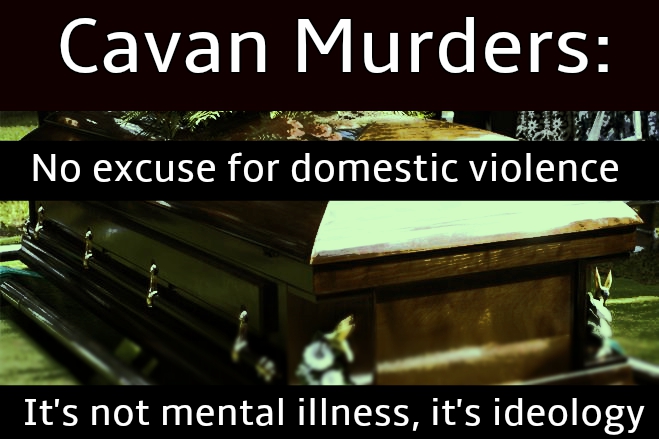
The story of the Cavan murders is one of male entitlement and violence, not mental illness.
We can all agree that the recent murders by a man in Co. Cavan, whereby he stabbed his wife and children to death before hanging himself, are horrific, disturbing, and tragic. But it's clear we can't all agree beyond that point.
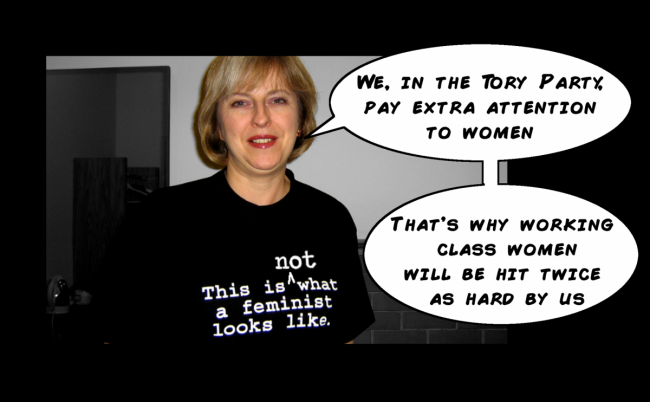 Theresa May has just become the UK’s latest Prime Minister and the second ever woman Prime Minister. She’s certainly a decent orator paired with a comedian of a speech writer who wrote a statement filled with faux concern about making the “UK a country that works for all and not just the privileged few” – it’s as if she thinks we don’t know she’s a member of the privileged-few-loving Conservative Party, or as she reminded us, Conservative and Unionist Party (I’m not sure that’s supposed to make us feel better about the Tories…).
On Sunday, a group of WSM and other anarchists took part in the annual March for Justice in Derry which commemorates the civil rights marchers who were shot dead by the British Parachute Regiment on 30 January 1972.
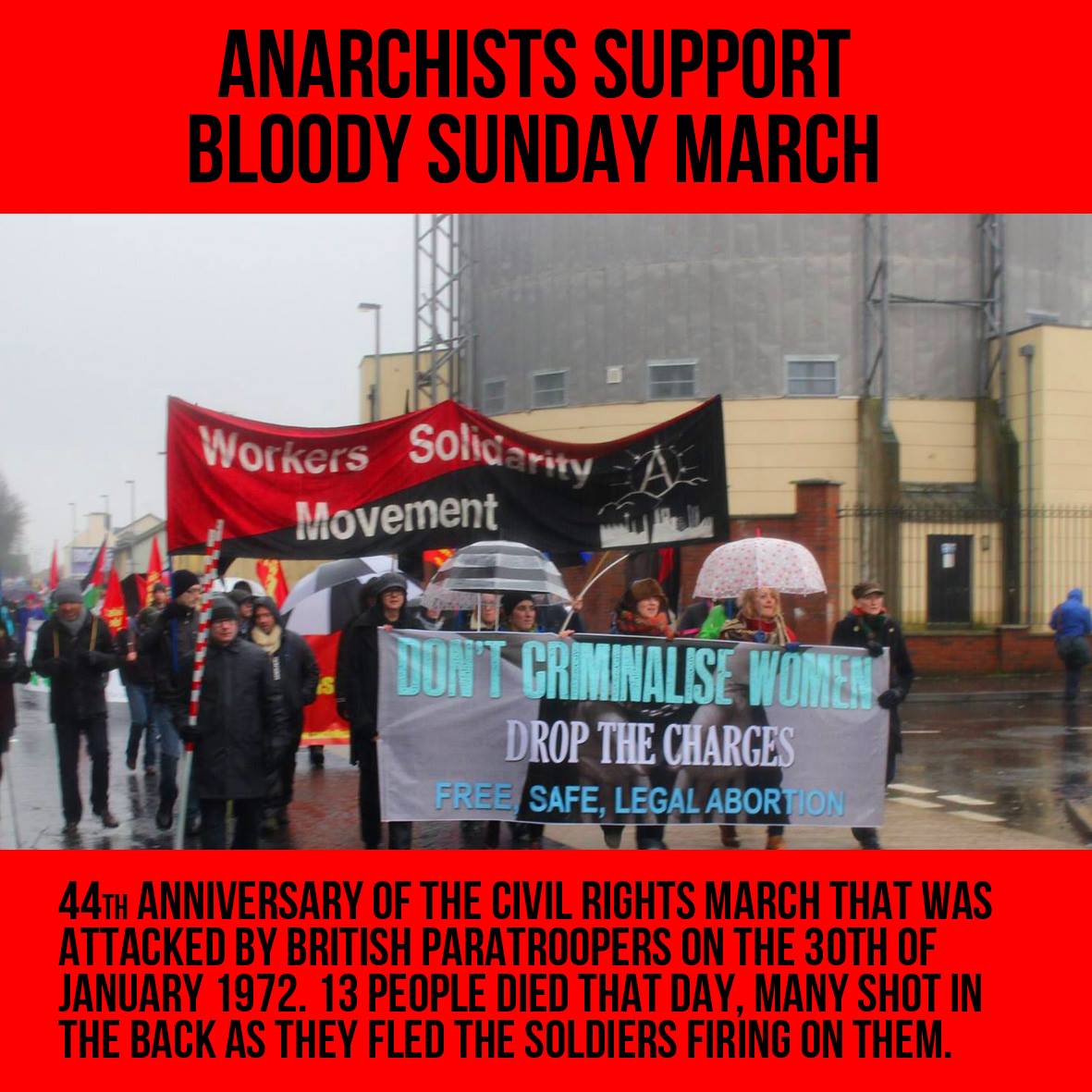
Read Bloody Sunday in Derry - Origins & Consequences of a Massacre
 One of the final acts of the last Fianna Fail government was to award licences to a number of companies to explore for commercial gas in the Northwest Carboniferous Basin (more commonly known as the Lough Allen basin). The Lough Allen Basin is a huge area that covers parts of counties Cavan, Donegal, Fermanagh, Leitrim, Mayo, Monaghan, Roscommon, Sligo and Tyrone. It is an area of 8000 square kilometres in total.
.jpg) News that the Red Cross, an international humanitarian organisation, have been directly assisting local community workers in the Rosemount area of Derryhas again heightened concerns of a potential “drugs epidemic” developing in the city.
News that the Red Cross, an international humanitarian organisation, have been directly assisting local community workers in the Rosemount area of Derryhas again heightened concerns of a potential “drugs epidemic” developing in the city.
The story first broke over the last few weeks prior to a BBC Spotlight programme investigating the vigilante group Republican Action Against Drugs or RAAD. It revealed that the Red Cross has been working with the Rosemount Resource Centre over the past eight months, believed to be the first time ever the humanitarian group has worked with another organisation in the north.
 On the 30th January 1972 British soldiers opened fire on protesters in the city of Derry, north-west Ireland. Twenty six unarmed protesters were shot, 13 died immediately or within hours, one more died just over four months later. Derry was in the section of Ireland claimed by the British state and the shootings happened in the context of the suppression of a growing civil rights movement demanding equality for Catholics in the 6 of Ulster’s counties claimed by Britain.
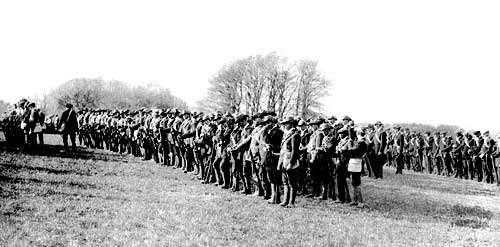 The period of Irish history from the 1880's to the 1920's defined and divided politics including socialist politics, on the island for the rest of the century. The most militant workers struggles occurred in the second half of that period, north and south, concentrated in the last five years. This was also the period of the 1916 insurrection in Dublin, the 1918-21 War of Independence, the treaty and partition of Ireland in 1921 and then in the south the bloody Civil War ending in 1923.
The year 1919 saw the greatest demonstration of the potential of Irish workers, north and south to take over the running of society but the events of the following years cemented the division that would do much to end workers militancy. In terms of working class struggle the periods of militancy of northern and southern workers coincide. Yet the working class was divided and these struggles remained almost completely isolated from each other. (Image: UVF training in 1914)
It is unfortunate, if perhaps somewhat inevitable, that the now annual battles around the 'marching season' fall along religious lines. The Orange parades are being used to test the supposed neutrality of the northern regime and the RUC in particular. The losing side in this dangerous game however is likely to be the working class, Protestant and Catholic, as the confrontations and the sectarian attacks that occur around the Orange marches drive people further into 'their own' communities.
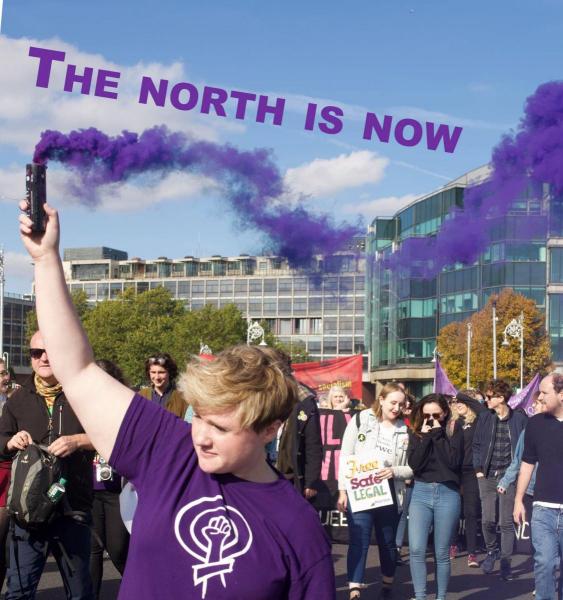 Abortion decriminalised in Northern Ireland. Marriage Equality decriminalised in Northern Ireland. It has been a long hard struggle, many years, many people.
Tonight we celebrate our victories. Tomorrow we will fight for more.
The final day of the countdown had some tension to it as the reactionary DUP and elements of the SDLP teamed up to try and reopen Stormont after 1000 days of not caring to shoot down these extensions of equality to the 6 counties. Writing ahead of these shenanigans the Alliance for Choice said "It is clearer that this action, after over 1000 days of no functioning government, has one sole agenda; to obstruct the fulfilment of the human rights of women, girls and anyone who can get pregnant. I take the view that those who have called for this sitting of the Assembly know that an Executive cannot be formed under these circumstances. This recall is nothing more than a political stunt and it is disgraceful that our bodies would be used as political pawns in such a manner."
“Every exclusively political revolution that is in defence of national independence or for internal change... [and] that does not aim at the immediate and real political and economic emancipation of people, will be a false revolution. Its objectives will be unattainable and its consequences reactionary.” Michael Bakunin.
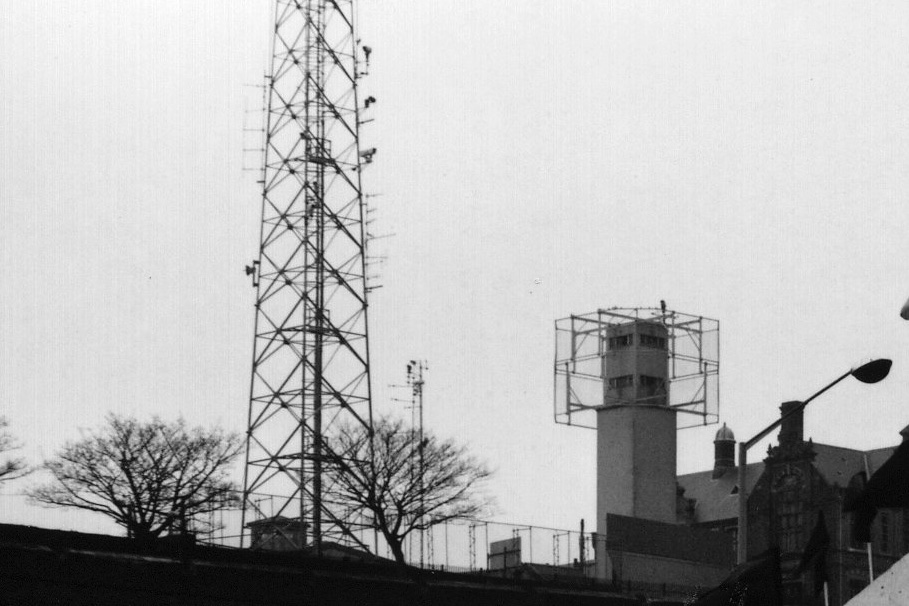 With less the two months until the Brexit deadline, the North of Ireland remains on edge as the British PM announces plans to deploy police reinforcements to six counties echoing past images for many of aggressive border checkpoints and control stoking up conflict.
In the the midst of this Brexit spectacle the real war continues to ravage the streets, housing estates and workplaces across the North in the form of a brutal austerity agenda of class warfare in cuts to public services and social welfare under the Stormont Fresh Start Agreement resulting in misery and deprivation for the many while the wealthy few have never had it so good on a local and global level. According to a recent report released by Oxfam in January this year ‘Billionaire fortunes increased by 12 percent last year – or $2.5 billion a day - while the 3.8 billion people who make up the poorest half of humanity saw their wealth decline by 11 percent’ (1)
