

Over 30 years of anarchist writing from Ireland listed under hundreds of topics
So now that the referendum is won and the government is moving towards enacting legislation that allows limited access to abortion, we're starting to hear questions being raised about Together for Yes activists running in elections. [1] For many people, the conspicuous endpoint of any political campaign is for the political activists to put forward one of their number to run for political office. We are going to argue against that for a number of reasons.
'2. We reject the idea that society can be changed through 'good people' gaining control of the power structures. This means we reject both the electoral strategy of the social democratic and green parties and the 'revolutionary' strategy of the various left groups.'
The WSM is working towards a free, equal, democratic society. We believe the only way to achieve this is by people taking their destinies into their own hands, forming grassroots mass movements, and creating new truly democratic institutions.
 Once it became clear that Trump was going to become the president of the USA, my Facebook feed became cluttered with attempts to understand how that could possibly happen. How could a white supremacist, misogynist and utterly transparent snake oil salesman accumulate so many votes? Those on the left both inside and outside the borders of the USA struggled to understand what had happened.
[Listen to the audio of this entire article]
A common conclusion in too many of these pieces is that the left needs to reach out, and listen to the concerns of, those who voted for him as a priority. In a similar fashion to how sections of the left evaluated Brexit, they see a working class anti-establishment rebellion in the Trump vote from what they term the ‘white working class’. They believe that component was won by Trump because it has been neglected by the left - often, they will assert, because the rest of the left was distracted by what they call identity politics.
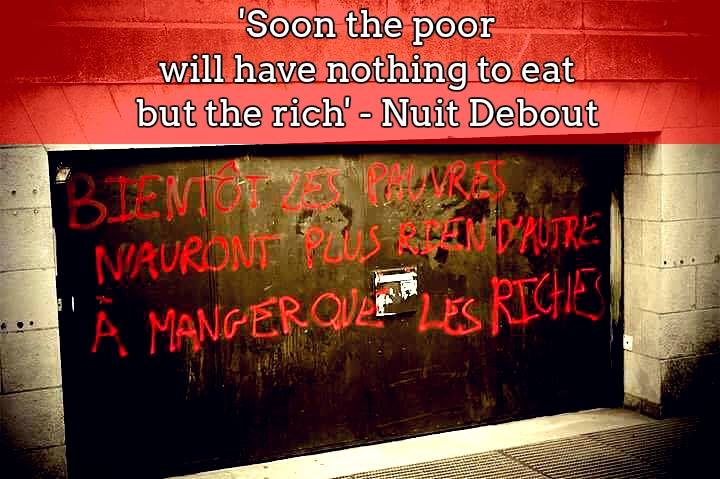 Since the worldwide recession in 2008, we have seen governments around the world make neoliberal reforms, states hammering through austerity measures. In Ireland we know only too well the extent of austerity, the state has cut everything from healthcare to social housing. We have seen the struggle communities have been fighting against the privatization of water. We have seen the ever rising number of people being made homeless, mothers and fathers having to sleep in cars and parks with their children. We have seen massive unemployment, our loved ones having to emigrate to the other side of the world to find work.
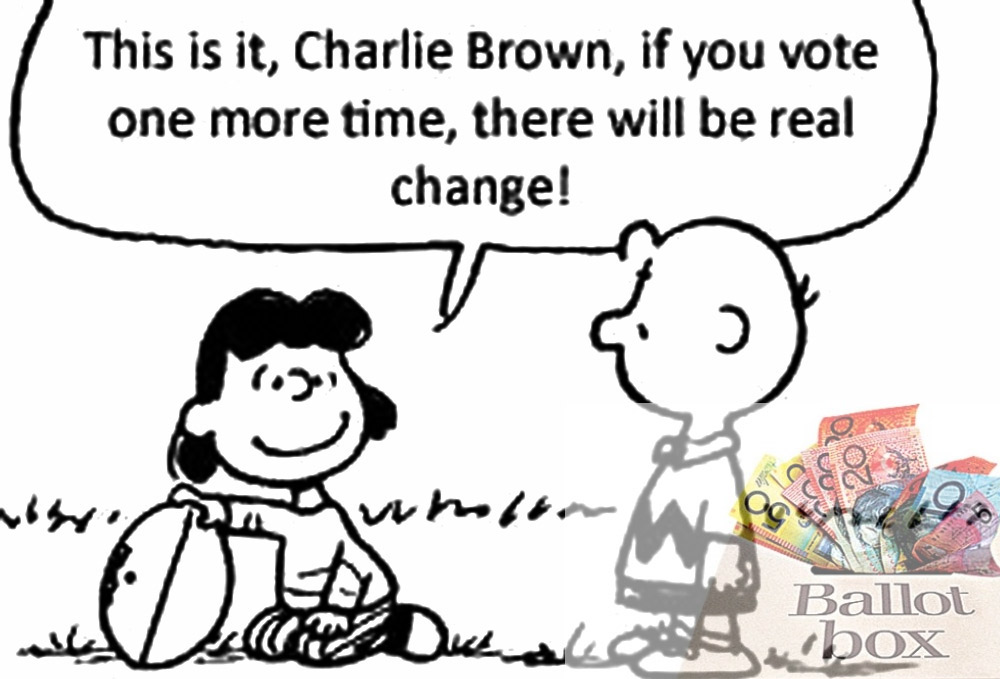 Why can’t the 99% simply vote in a government that acts in their interest and not that of the 1%
At a simple level parliamentary elections sound like the ideal way for the mass of the ‘have nots’ to use their numbers to overcome the power and influences of the tiny number of have’s. Occupy talked about this division in the language of the 1% and 99%; a crude approximation that does reflect a reality where the number of wealthy decision makers is actually very tiny, indeed less than 1%. So, why can’t the 99% simply vote in a government that acts in their interest and not that of the 1%? [Listen to this article]
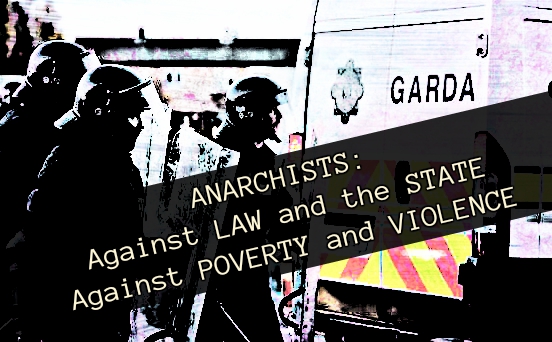 Why It’s Right to Resist the Government
“The law is essentially the weapon of the privileged, it is made by them for the purpose of enshrining their power and the people need to dismantle it entirely if they want to be genuinely free” – Errico Malatesta
Does this mean anarchists are against laws? Anarchists are against laws that are created by the rich and the privileged layer of society which are used in their favour. These same laws are used to exploit and oppress the rest of society. These laws are designed to give as little as possible to people.
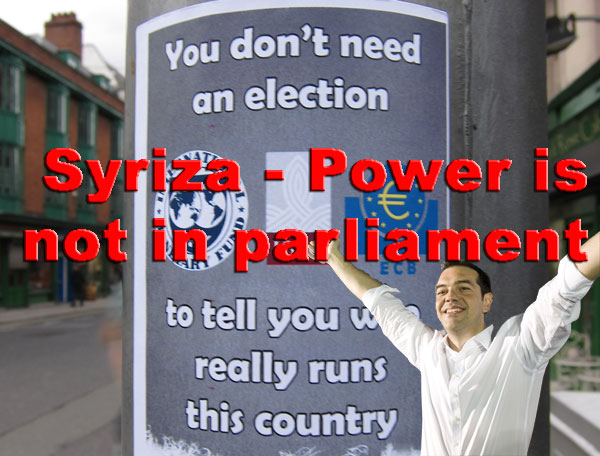 Today, across Europe, the left is excited by Syriza topping the polls in the Greek election. Some on the left have gone so far as to suggest the election itself will mark the end of austerity policies, in the terminology of the Anglo left, an end to the idea that There Is No Alternative (TINA). Another indication that something of significance is happening is that ahead of the election a new wave of capital flight has started from Greece with an estimated 8 billion transferred out of the country over the last few weeks.
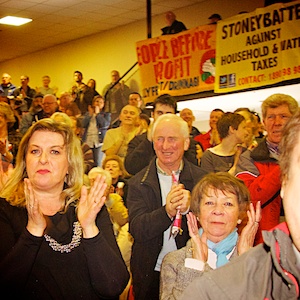 This article is a plea to campaign members and activists to vote down proposals that have been put in to this Saturday's CAHWT conference to endorse a slate of candidates in elections and to instead concentrate our collective energies on building the mood of political protest that is necessary to defeat the property tax in the immediate future. The WSM will be distributing this text as a leaflet on Saturday, let us know if you would like to help.
 We don't live in a socialist world. In fact never before has capitalism exercised such total hegemony. Despite huge disaffection with austerity and global capitalism, for billions of people the world over, an alternative is impossible to imagine. One of the key tasks of the left then, is not just to oppose attacks on the living conditions of working class people, but to provide an alternative vision of a society where we do not exist to serve the economy, but rather the economy exists to serve us, a society where the slogan "from each according to their ability, to each according to their needs" becomes a reality.
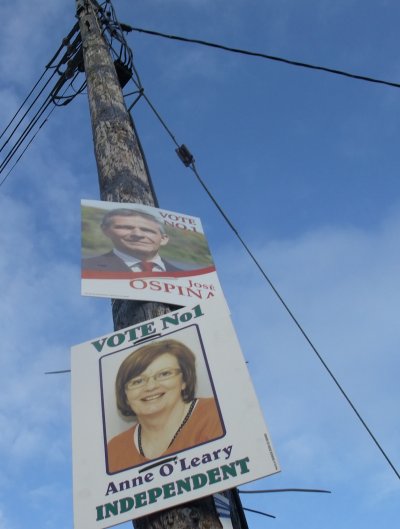 The Workers Solidarity Movement, along with anarchist organisations throughout the world, refuses to take part in parliamentary elections. Is it not downright weird, or even hypocritical, when anarchists claim to want more democracy than anyone else? Is this a rejection of democracy? Alan MacSimoin tries to answer some of the questions that arise again and again.
