
Over 30 years of anarchist writing from Ireland listed under hundreds of topics
I had mixed feelings attending Pride, but mostly felt bewildered and pissed off. I was looking forward to this year's Pride for quite some time. It was my second ever Pride, and I came to march with the Radical Left Bloc, one of two radical blocs attending, which was organised by others. Like last year, I was shocked – somehow again – by the level of corporate infestation and toothlessness.
Here is an important question for everyone: what's the point of Pride? From being there, I know clearly that people's answers to this question vary hugely.
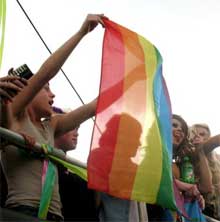 Lesbian, Gay, Bisexual, Transgender and Queer Pride Celebrations have recently been seen all over the world, as a celebration of sexual diversity. It's worth remembering the history of Pride celebrations, of their origin in a homophobic and repressive culture, and their challenge to a world that refused to recognise sexual freedom. In this article, Paul McAndrew discusses the origins of Pride as a moment when the queer community in New York stood up and fought to be proud of their sexualities.
The presence of uniformed cops marching as a bloc on Dublin Pride meant that for the first time Pride Alternative was organised. Many participants may not have been aware that just across the street 3 van loads of riot police were lurking down a laneway, presumably there so that if there was any attempt to block the cop bloc they would have charged in. Thats so, so far from the roots of Pride in the riots that followed police raids on the Stonewall Inn.
60,000 people marched as part of Pride this year in Dublin according to the organisers. This would make it the largest to date, this year was also significant as it was marking 25 years since the 1993 decriminalisation of sex between men.
25 years after the government finally removed the 10 year jail sentence for sex between men the Irish army marched near the front of parade, with many in the army band wearing rainbow angel wings. There was one lone counter protester marching along the route 100m ahead of Pride with a cornflakes box on the end of a umbrella. He had stuck a religious icon and the slogan ‘Sodomy is Sexual Abuse’ on the side of the box! While that was pretty laughable we do not forget that on the eve of the pride there were homophobic attacks in Dublin and Laois so we have a lot to fight for even if Pride today can feel more like a corporate sponsored carnival than a protest.
Footage of the Working Class Queeroes bloc on Dublin Pride 2017 including the banner drop before Pride and the bloc smoking up the rainbow flag prior to crossing the river Liffey.
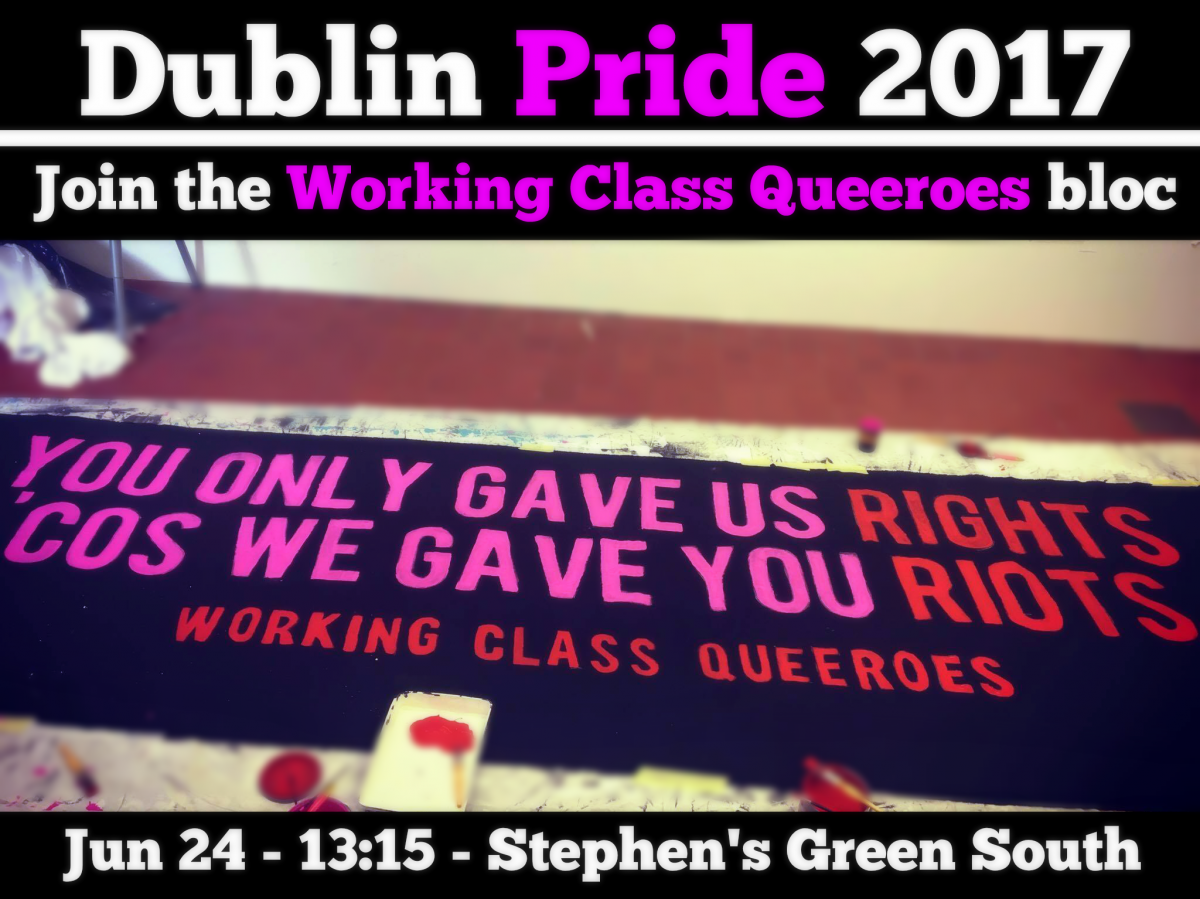 The Dublin LGBTQ Pride Parade is on June 24th.
A radical bloc, the Working Class Queeroes ("Fucking Dregs"), has been organised to push for a genuine queer liberation which involves neither being the flamboyant PR managers of corporations and parties, nor succumbing to right-wing and conservative ideas or a cis- and homo-focused agenda. Find out more about the Working Class Queeroes here: https://workingclassqueeroes.wordpress.com
Join us at 1:15pm outside HedgeServ, south of St. Stephen's Green.
Organised by those outside and inside the WSM.
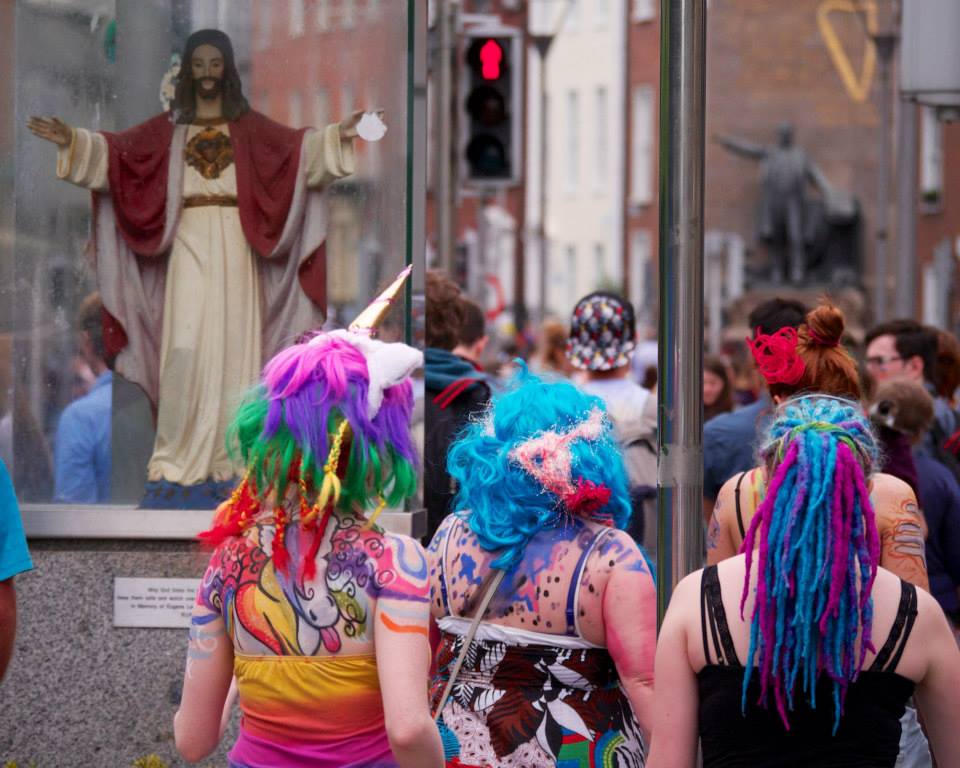 Thousands of people paraded through the streets of Dublin Saturday June 27th for LQBTQ Pride 2015.
Pride followed shortly after the overwhelming victory in the Marriage Equality referendum and some of the blocs and banners referenced that including a controveral 'Fuck Marriage; We want revenge" one.
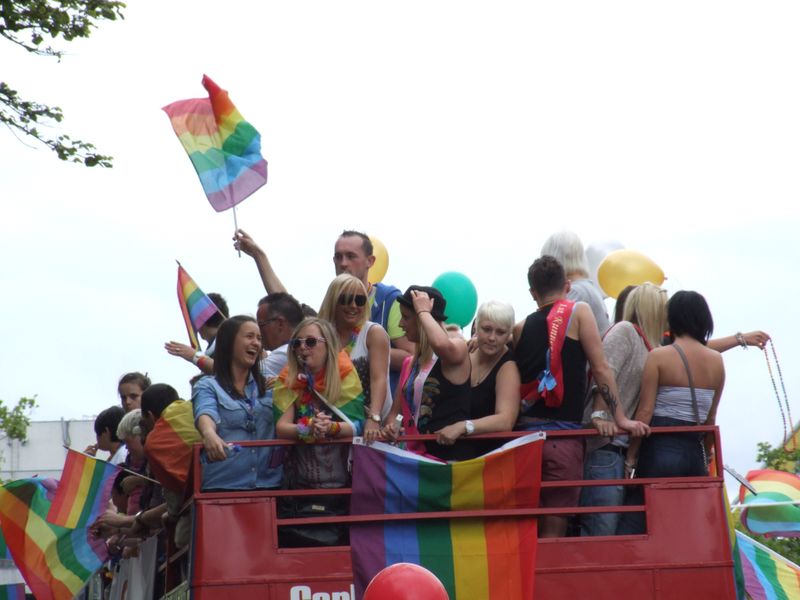 For the third year in succession the Cork branch of the Workers Solidarity Movement participated in the Cork Pride Parade. Anarchists have been involved in Pride organising in Cork since its beginnings in the mid-noughties and have long seen Pride as both an important civic festival and an opportunity to connect with Cork's burgeoning LGBT community. Cork WSM also distributed a leaflet on Pride and its politics at the parade (see below). The parade was the culmination of a week of hectic activity and celebration by Cork's LGBT community across a number of venues and across a range of activities.
The WSM took part in Pride in Dublin over the weekend as part of the PINC! bloc. Below are a selection of images of the day captured by our photographers.
We've made a much larger collection available via the Pride 2012 album on the WSM Facebook page. The slideshow above is a smaller selection of these images pulled from our photographers Flickr account. Images made available under the Attribution-NonCommercial-ShareAlike Creative Commons license.
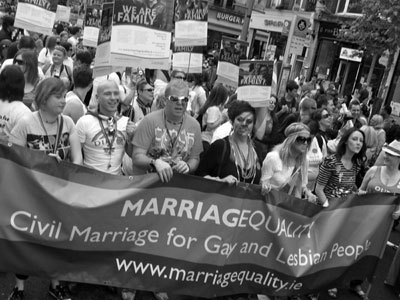 June last saw another massive Pride in Dublin with approximately 25,000 people taking part. While Pride has very much become more of a social and commercial event since its early years in Dublin it also remains a strong political expression of the ongoing struggles against Queer oppression. There was also a thousands strong “March for Marriage” through Dublin on August 14th, organised by LGBT (Lesbian, Gay, Bisexual and Transgender) Noise, which opposes civil partnership on the grounds that it does not provide similar rights to those of married heterosexual couples.
