

Over 30 years of anarchist writing from Ireland listed under hundreds of topics
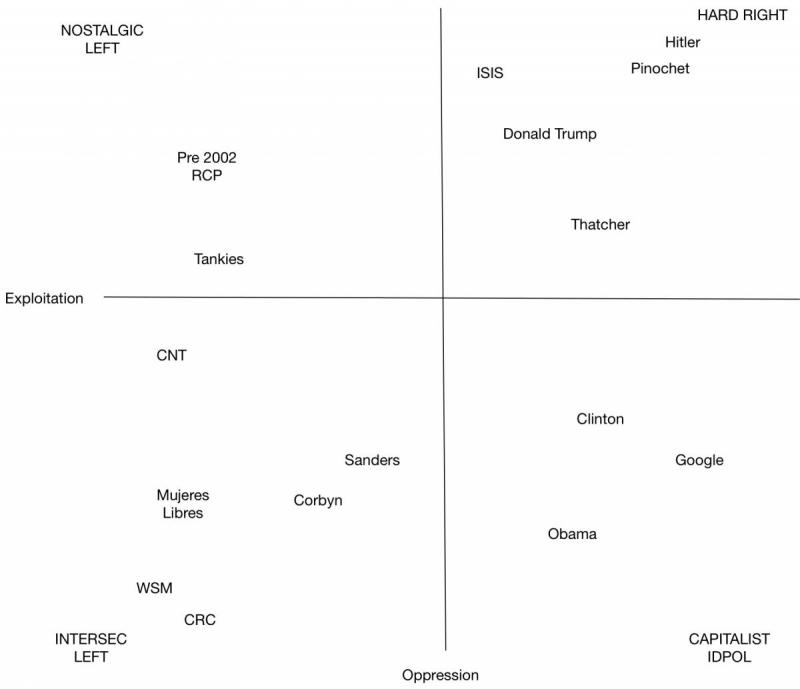 Discussions about Identity Politics (IdPol) absorbs a huge amount of energy across the political spectrum. Discussion on the left however is often complicated and made overly hostile because they take place along the single axis of oppression which means proponents of IdPol get lumped in with Hilary Clinton while opponents get lumped in with Donald Trump. This understandably encourages bad faith discussions that throw a lot of heat and very little light. Here we are going to argue that a much more useful exchange can happen when we instead create a plot where one axis is oppression and the second is exploitation as that puts both Trump & Clinton a good distance away from socialists. [Audio of this article]
The 12th Dublin anarchist bookfair heard this account from Wendy, a Human Rights & immigration lawyer who visited Rojava in May 2018 as part of a fact finding delegation. [audio]
This is a series explaining the 9 Points of Unity of the Workers Solidarity Movement - an anarchist organisation active on the island of Ireland. [Download PDF of these explanations]
The WSM regularly discusses, debates and decides on what our collective political approach is. The Points of Unity are the most basic political agreement necessary to be a WSM member or supporter. They are 9 short points which outline the anarchism the WSM stands for.
'7. We actively oppose all manifestations of prejudice within the workers' movement and society in general and we work alongside those struggling against racism, sexism, [religious] sectarianism and homophobia as a priority. We see the success of a revolution and the successful elimination of these oppressions after the revolution being determined by the building of such struggles in the pre-revolutionary period. The methods of struggle that we promote are a preparation for the running of society along anarchist and communist lines after the revolution.'
Human beings are complex. We have many sides, many needs, wishes, strengths and weaknesses, many different obstacles and opportunities in life. So while acknowledging the huge harm caused by capitalism and the state, our concerns naturally do not end there. The Workers Solidarity Movement are anarchists because we want the total liberation of humankind, the full realisation of our need and wish to fed, sheltered, clothed, respected, in charge of ourselves, within a real community, to be our true selves, and the rest of the rich tapestry which makes a good life. And so we recognise that patriarchy, racism, queerphobia, ableism, religious domination and sectarianism, xenophobia, and every way that joy is sucked out of our lives, that we are stifled, attacked, are important forms of oppression and marginalisation in their own right which must be eradicated. While capitalism and the state are instrumental in spreading these oppressions, and while these oppressions are instrumental in sustaining capitalism and the state, they have their own independent existence and reasons to be replaced by healthier relations between people.
The WSM's collectively agreed position on women's freedom as amended by the July 2017 WSM National Conference. This position paper sits under the Sex, Gender, and Sexuality paper and does not repeat that material here.
What is this?
This paper outlines how we the intersections of exploitation and oppressions and what approach the WSM takes in relation to this. Our collective theoretical understanding is framed in the WSM Constitution’s core point of unity number 7: “We actively oppose all manifestations of prejudice within the workers' movement and society in general and we work alongside those struggling against racism, sexism, [religious] sectarianism and homophobia as a priority. We see the success of a revolution and the successful elimination of these oppressions after the revolution being determined by the building of such struggles in the pre-revolutionary period. The methods of struggle that we promote are a preparation for the running of society along anarchist and communist lines after the revolution.”
That theory is informed by the individual and collective experiences of WSM members over 30 years and our adaption of anarchism to our local contexts which includes specific experiences of oppression and personal & historical experiences of the anti-colonial struggle in Ireland and elsewhere. The development of this paper involved our own experiences being placed alongside our discussions of the broad set of writings and observations emerging from the anarchist and feminist study of the relationship between gender, class and race and in particular what is often referred to today as ‘Intersectionality’.
(CW: physical, emotional, sexual, abuse/violence)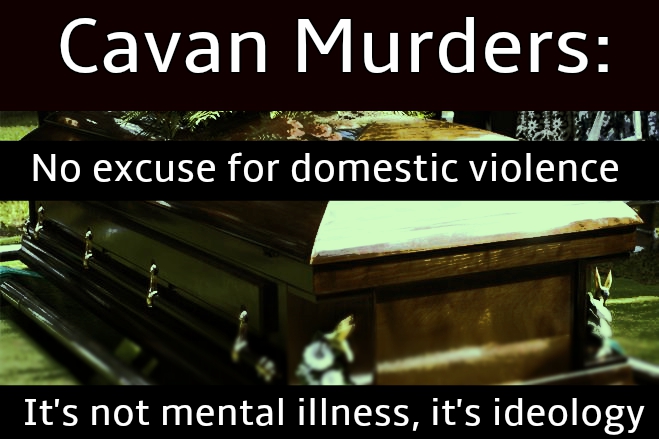
The story of the Cavan murders is one of male entitlement and violence, not mental illness.
We can all agree that the recent murders by a man in Co. Cavan, whereby he stabbed his wife and children to death before hanging himself, are horrific, disturbing, and tragic. But it's clear we can't all agree beyond that point.
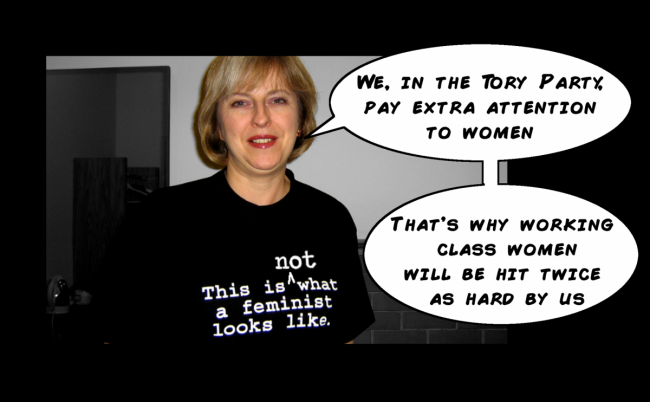 Theresa May has just become the UK’s latest Prime Minister and the second ever woman Prime Minister. She’s certainly a decent orator paired with a comedian of a speech writer who wrote a statement filled with faux concern about making the “UK a country that works for all and not just the privileged few” – it’s as if she thinks we don’t know she’s a member of the privileged-few-loving Conservative Party, or as she reminded us, Conservative and Unionist Party (I’m not sure that’s supposed to make us feel better about the Tories…).
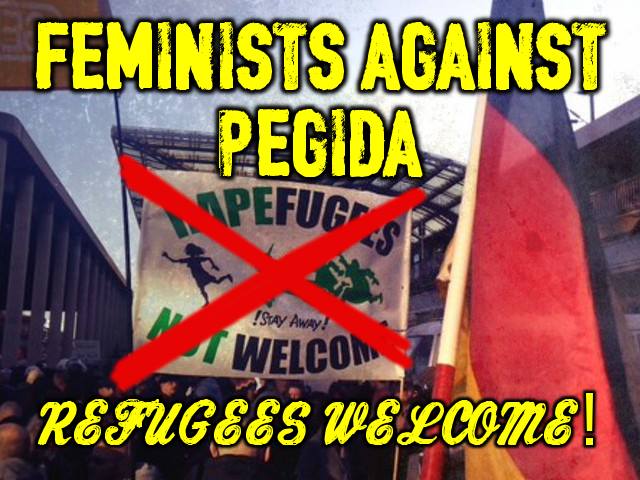 The Neo-Nazi group Pegida is attempting to establish a branch in Ireland this Saturday in Dublin. Pegida, the "anti-Islamifacation" group that is attempting to hijack anti-establishment politics by placing the blame of the current global capitalist crisis on the shoulders of refugees and migrants: those with no systemic or economic power in our society.
Pegida Ireland is trying to mask their vitriolic racism as concern against rape amongst other things. This feminist group says stuff your concern.
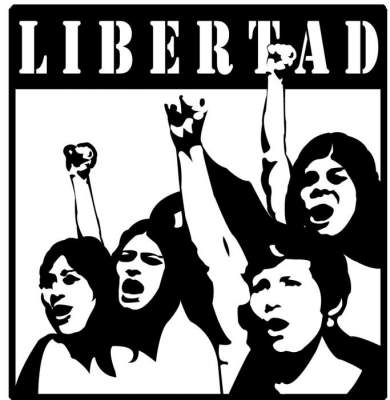 Anarchism can learn a lot from the feminist movement. In many respects it already has. Anarcha-feminists have developed analyses of patriarchy that link it to the state form. We have learned from the slogan that "the personal is political" (e.g. men who espouse equality between all genders should treat the women in their lives with dignity and respect). We have learned that no revolutionary project can be complete while men systematically dominate and exploit women; that socialism is a rather empty goal--even if it is "stateless"--if men's domination of women is left intact.
